
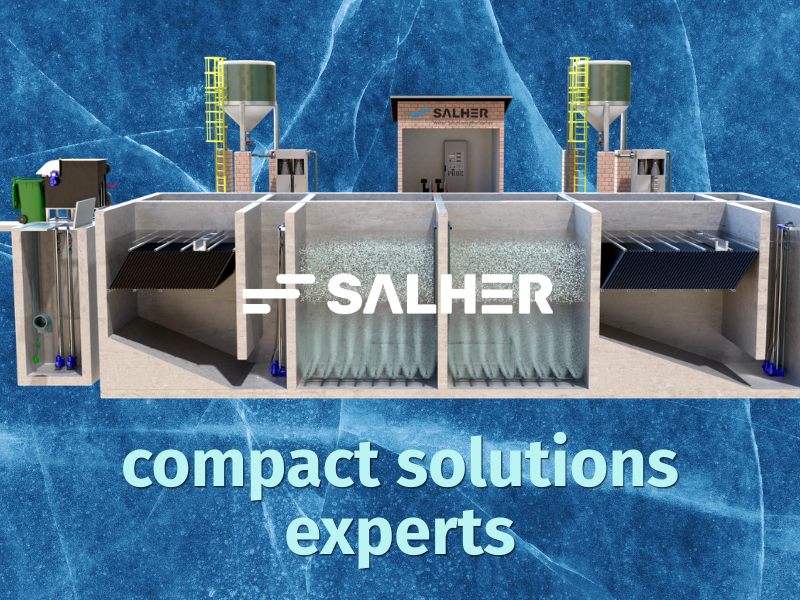
Salher proposes compact solutions to increase WWTP capacity without expanding the existing facility
Increasing flow rates and more stringent discharge requirements are leading many wastewater treatment plants to seek new ways to increase their treatment capacity without undertaking major expansions. Salher addresses this challenge by designing compact, modular solutions tailored to the needs of each facility.
Over time, many wastewater treatment plants need to handle higher pollutant loads, treat additional flows or adapt to increasingly demanding discharge requirements. These expansions are not always straightforward: limited space, the difficulty of carrying out civil works or the need to keep the facility operational can make the construction of new reactors impractical.
In this context, biological intensification offers an alternative for improving the performance of existing treatment processes. Its aim is to make more efficient use of the available volume by optimising treatment conditions or incorporating technologies that increase treatment capacity without necessarily increasing the plant’s physical footprint.
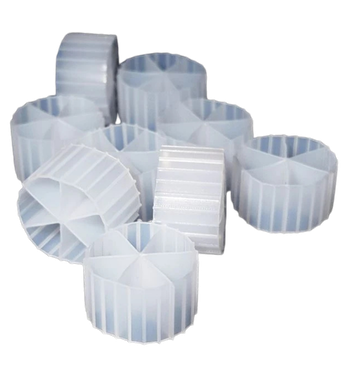
Among the technologies that can intensify biological treatment is MBBR (Moving Bed Biofilm Reactor)
MBBR is a process based on the growth of biomass on mobile plastic carriers inside the reactor. By increasing the surface area available for microorganism growth, this technology makes it possible to increase the amount of active biomass within the available volume and improve treatment capacity without proportionally increasing reactor size.
The incorporation of MBBR can be an alternative for optimising available volume, increasing treatment capacity and improving WWTP performance, particularly in projects involving the expansion or adaptation of existing facilities. However, its application must be assessed according to the characteristics of each plant, flow rate, pollutant load, aeration system and the other treatment stages, in order to determine the most appropriate design and configuration.
Biological intensification and compact expansion: two ways to improve a WWTP
Biological intensification should not be understood solely as the incorporation of a specific technology. In many cases, improving plant performance requires an assessment of the entire treatment process: pre-treatment, biological treatment, aeration, solids separation, tertiary treatment and final water quality.
When the existing infrastructure allows the process to be optimised, intensification can help make better use of the available reactors. However, if the increase in flow or pollutant load exceeds the capacity of certain stages, it may be necessary to incorporate new equipment or expand part of the treatment line.
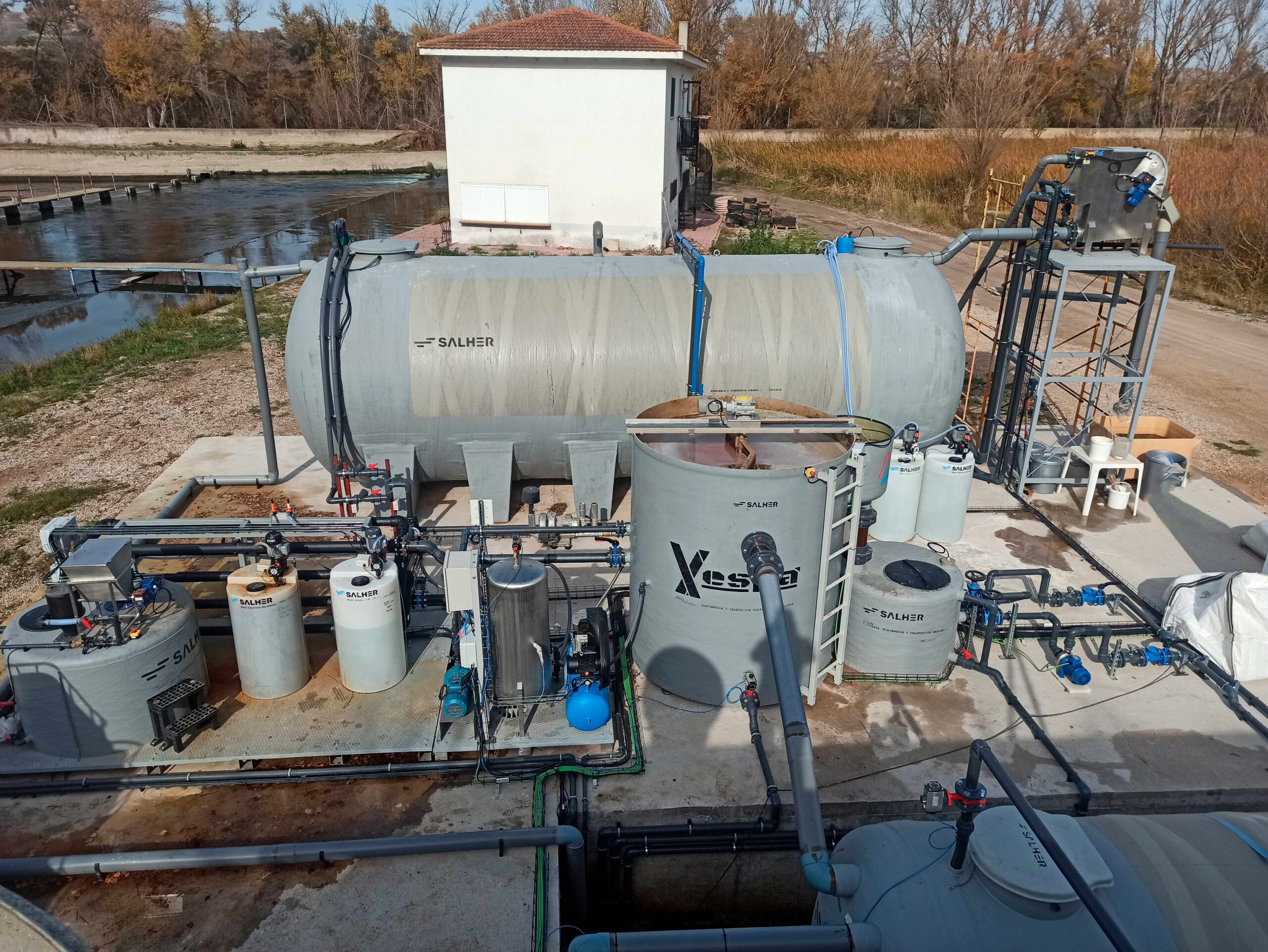
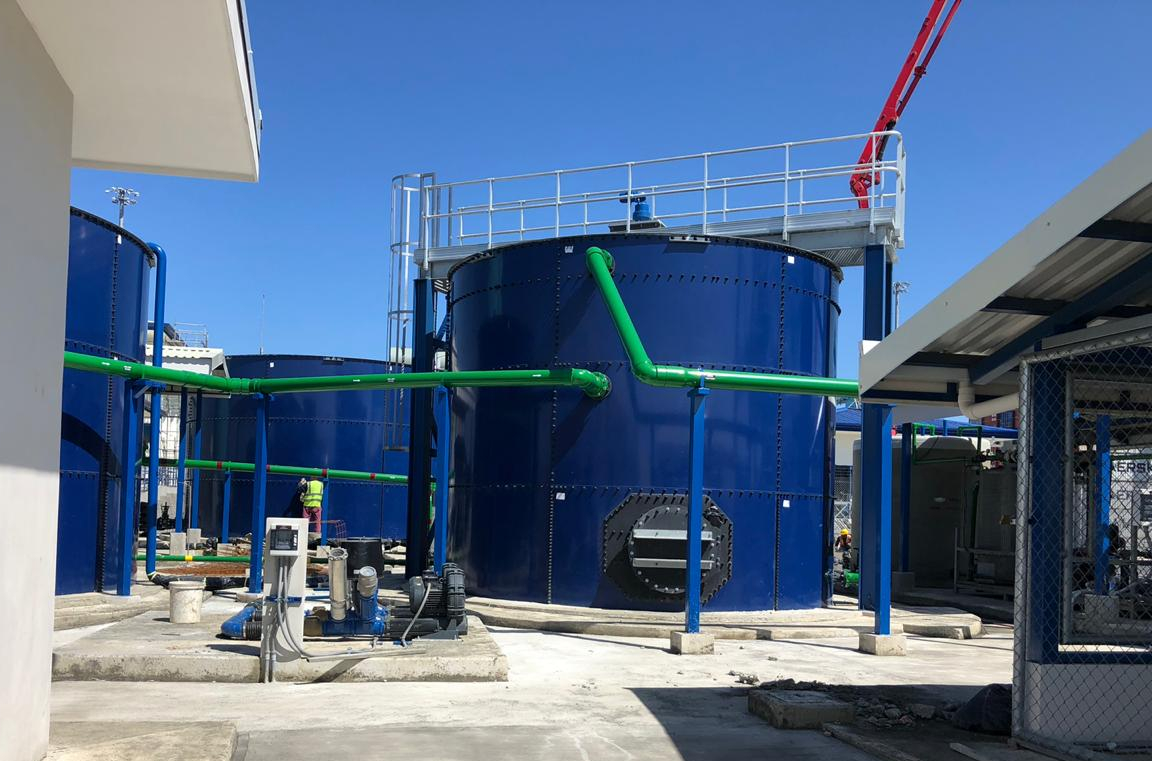
In these cases, Salher’s compact and modular solutions offer an alternative for increasing capacity without necessarily resorting to major construction works. Their design makes it possible to adapt the facility to the space, accessibility and operational conditions of each project.
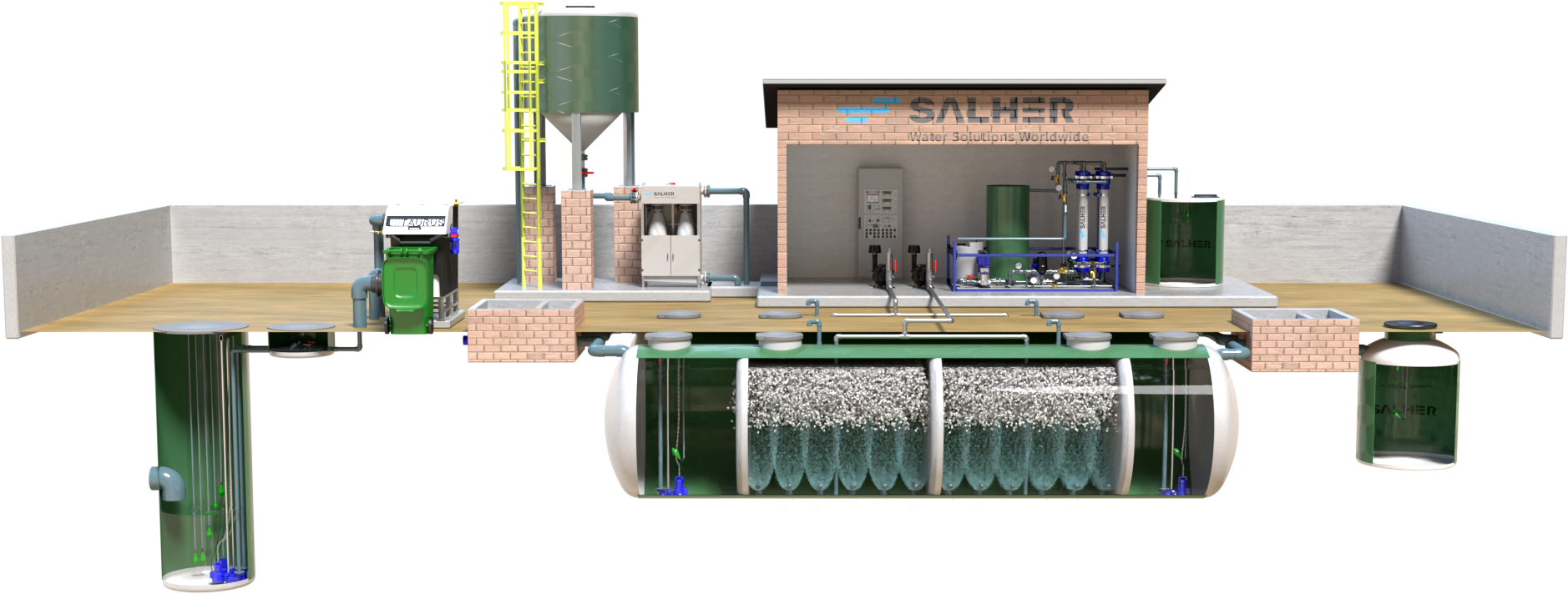

A solution tailored to every expansion requirement
Not all WWTPs require the same strategy to increase their capacity. While some facilities may benefit from intensifying their biological processes, others may require new compact units, modular tanks or the adaptation of specific treatment stages.
For this reason, the first step is to assess the plant’s current conditions and define a solution that improves performance without compromising treatment stability.
With its experience in engineering, manufacturing and commissioning water treatment equipment, Salher offers solutions tailored to projects that require greater capacity, improved efficiency and better use of available space.
Do you need to expand or adapt your WWTP?
Contact Salher and we will assess the most suitable solution for your facility’s needs.
Latest news
New urban wastewater directive: how to adapt WWTPs to quaternary treatment and micropollutants ?
The new Directive (EU) 2024/3019 tightens wastewater treatment requirements and places a stronger focus on micropollutant removal, water reuse, energy efficiency and circularity. Salher is preparing...
How to eliminate the chlorine smell in swimming pools? Salher introduces new ozone water treatment solutions
The characteristic chlorine smell in swimming pools, irritated eyes and dry skin are no longer unavoidable. Ozonation is rapidly becoming the preferred water treatment technology for facilities...
Why hydrocarbon separation remains a critical part of industry?
In many industrial processes, from oil extraction and fuel refining to fleet washing and manufacturing operations, water comes into contact with hydrocarbons. Salher® hydrocarbon separators are...
Salher Products
Designed and developed to meet all the requirements in water treatments.

Services

Project and Design
Engineering development and projects management.

Manufacturing
Production of GFRP, polypropylene and steel equipment.
Assembly of modular equipment and integration in civil works.

Supply
Selection of equipment and instrumentation to provide an integral water treatment solution.

Commissioning
Technical assistance in the electromechanical and electrical assembly of every water treatment plant.

Maintenance
Post-installation control service by a qualified technical staff.

Courses & documentary support
Practical training and delivery of manuals of operation, commissioning and maintenance.

salher@salher.com
Carrera Toledana, 33. Arganda del Rey. Madrid 28500. Spain.
+34 91 870 00 15
Spain / +34 91 870 00 15
Poland / +48 22 737 24 95
Portugal / +351 234 795 821
Engineering – Wastewater treatment – Purification – Liquid/solids separation equipment for industrial and municipal process applications – Surface water – Groundwater – Water Reuse – Drinking Water – Hydrocarbon and Oil Water Separation