

Water reuse system installation: how to make airports more sustainable?
Airports are critical infrastructure because they play an essential role in a nation’s transportation, economy, and security. In a world where sustainability is imperative for infrastructure, airports have a responsibility to improve their water management. Salher has spent 40 years developing specialized solutions for treating and reusing wastewater generated at airports worldwide.
Airports generate various types of wastewater, such as sanitary wastewater from restrooms and lounges; wash water from aircraft, vehicles, and equipment; stormwater contaminated with hydrocarbons, oils, or chemicals; wastewater from restaurants and commercial areas; and de‑icing fluid from aircraft, laden with glycols and other chemicals.
To treat sanitary wastewater and wastewater from restaurants and shops, Salher has designed and manufactured compact treatment plants using activated sludge, moving bed biofilm reactors (MBBR), membrane bioreactors (MBR), or bacterial beds. Depending on the project’s needs, these plants may include preliminary pumping stages; pretreatment units such as coarse screens, grit chambers, and grease traps—especially recommended for catering wastewater—or primary treatments, either static or advanced, like dissolved air flotation (DAF). All installations can be enhanced with sludge treatment lines and water reuse systems.
Treating Water Containing Hydrocarbons
Salher offers over 18 models of hydrocarbon separators—with CE certification under European standard EN‑858—capable of treating polluted rainwater, as well as wash and de‐icing water. These last categories, however, require additional advanced technologies like membranes, filters, and oxidation systems.
In airport environments, handling rainwater is vital due to large runoff areas—runways, taxiways, and parking zones. Salher provides a standard range of regulation valves and also designs custom systems tailored for stormwater retention ponds or on-site treatment of oily or hydrocarbon‐laden water.
Can airport wastewater be reused?
Among all the wastewater generated at airports, the most readily reusable types are sanitary wastewater and effluents from restaurants and shops. Opting for this option—even if it initially increases the budget for installing the airport’s water treatment plant—enables savings in water resources by reducing dependence on potable water supplies, and offers long‑term cost benefits, since treated wastewater can be reused for irrigation, cleaning, or even technical processes such as cooling in HVAC systems.
Additionally, investing in a treatment facility that includes reuse systems prevents the release of contaminated water into the environment, thereby helping to comply with increasingly stringent environmental regulations.
An airport that reuses its water demonstrates sustainability leadership and adds value to local communities, especially in developing countries, where water is a critical resource. Companies like Salher, with experience in this field, have the capacity to design customized and efficient solutions tailored to local needs.


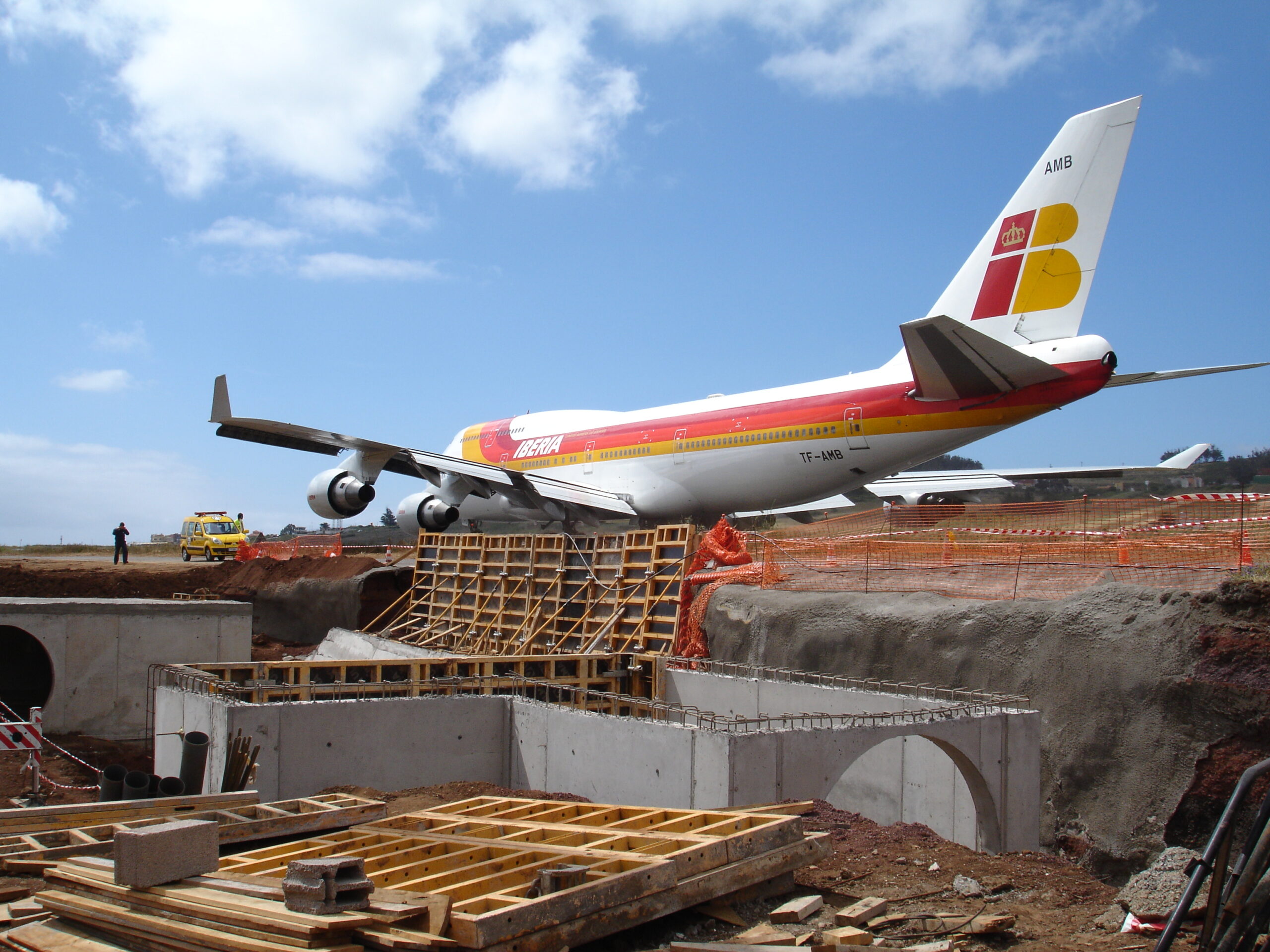

Salher solutions for airport water treatment and reuse
The Tamale International Airport in Ghana required an expansion, as the city serves as a hub for the pilgrimage to Mecca. This expansion presented an opportunity to benefit the city and its inhabitants. Furthermore, in a country still facing challenges in access to drinking water, implementing water reuse plants in critical infrastructures—such as an international airport—is essential to ensure sustainable supply and reduce dependence on conventional water sources.
Recently, Salher has installed and commissioned one of its treatment plants, which includes a reuse system to treat sanitary wastewater generated in the airport terminal’s public restrooms.
- The treatment plant includes auxiliary components designed by Salher, such as pumping stations to collect wastewater and to re-pump the treated water for reuse. It also incorporates a TAURUS fine-screening system to protect electromechanical elements from solids and ensure proper operation.
- Next, the water enters a homogenization and regulation tank before entering the Vespa physico-chemical system, a DAF unit that minimizes pollutant loads: removing between 50–80% of BOD₅, 60–80% of COD, and 90% of suspended solids, oils, and fats.
- From the DAF, the water proceeds to an anoxic tank and into a biological reactor with fine bubble diffusers to reduce organic matter. Due to local regulations, the plant also includes a phosphorus removal system.
- For water reuse, the plant is equipped with two ultrafiltration membrane systems aimed at removing trace and micro-contaminants, resulting in an effluent entirely free of viruses, bacteria, and other pathogens—a water quality ideal for reuse.
- Wastewater treatment plants can generate unpleasant and potentially harmful odors for operators. To effectively eliminate these toxic gases, Salher has included a deodorization system consisting of a filter to treat contaminant gases such as hydrogen sulfide, mercaptans, and volatile organic compounds (VOCs).
Salher has offered its expertise and advanced technology to design tailored solutions for the specific needs of this international airport, thus contributing to sustainable development and environmental protection in regions facing significant water challenges. In Spain as well, Salher has taken part in the renovation of water treatment systems at several airports, installing its ultrafiltration reuse technology in the terminals at Dénia (Alicante) and Ibiza.
To ensure success in the installation and operation of a water treatment plant, it is essential to contract directly with the companies responsible for the design and development of these solutions. This offers key advantages. On one hand, having detailed knowledge of each system component allows for precise installation and optimal configuration, tailored to the specific conditions of the airport.
On the other hand, avoiding intermediaries prevents communication issues that can lead to technical errors or misunderstandings, speeding up commissioning and ensuring optimal operation from the start. Furthermore, in such complex systems, commissioning without deep knowledge can result in delays and costly subsequent adjustments.
Finally, the companies that design the solutions also provide specialized support, maintenance services, and technological updates, ensuring that the system operates efficiently throughout its lifespan.
Efficient and sustainable water management is a priority for airports seeking to reduce their environmental impact and operate responsibly. Installing dedicated water treatment plants is not only a key step toward sustainability but also an economically smart decision. By contracting directly with the developers of the water treatment solutions, airports guarantee a streamlined, safe, and efficient process that enables them to successfully meet their environmental and operational goals.
For more information
Latest news
How to eliminate the chlorine smell in swimming pools? Salher introduces new ozone water treatment solutions
The characteristic chlorine smell in swimming pools, irritated eyes and dry skin are no longer unavoidable. Ozonation is rapidly becoming the preferred water treatment technology for facilities...
Why hydrocarbon separation remains a critical part of industry?
In many industrial processes, from oil extraction and fuel refining to fleet washing and manufacturing operations, water comes into contact with hydrocarbons. Salher® hydrocarbon separators are...

New Salher ozonation range: proprietary technology for water and air treatment
At Salher, we continue expanding our technological portfolio with a new range of ozonation systems designed to cover everything from small installations to large industrial processes: the new OZW...
Salher Products
Designed and developed to meet all the requirements in water treatments.

Services

Project and Design
Engineering development and projects management.

Manufacturing
Production of GFRP, polypropylene and steel equipment.
Assembly of modular equipment and integration in civil works.

Supply
Selection of equipment and instrumentation to provide an integral water treatment solution.

Commissioning
Technical assistance in the electromechanical and electrical assembly of every water treatment plant.

Maintenance
Post-installation control service by a qualified technical staff.

Courses & documentary support
Practical training and delivery of manuals of operation, commissioning and maintenance.

salher@salher.com
Carrera Toledana, 33. Arganda del Rey. Madrid 28500. Spain.
+34 91 870 00 15
Spain / +34 91 870 00 15
Poland / +48 22 737 24 95
Portugal / +351 234 795 821
Engineering – Wastewater treatment – Purification – Liquid/solids separation equipment for industrial and municipal process applications – Surface water – Groundwater – Water Reuse – Drinking Water – Hydrocarbon and Oil Water Separation